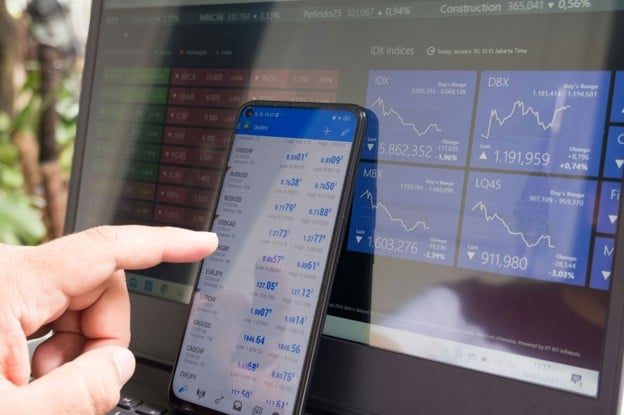
Trading has never been more accessible in Kenya. With M-Pesa enabling instant deposits, smartphones providing advanced charting tools, and regulated brokers expanding across East Africa, more people than ever are exploring forex, stocks, and CFDs. However, easier access also means beginners can lose money quickly if they start trading without understanding the risks.
This guide cuts through the noise and gives you the honest foundation every Kenyan trader needs before placing a single live trade.
What Is Trading?
The first thing to get clear on is the difference between trading and investing. Investing means buying assets like stocks, bonds, or money market funds and holding them over months or years to grow wealth gradually. Trading means actively buying and selling financial instruments, forex pairs, CFDs, commodities, and indices to profit from short-term price movements.
Both have a place in building wealth, but trading carries significantly higher risk. Prices in active markets move fast, and leverage, borrowing capital from your broker to control larger positions, can amplify both your gains and your losses. Many beginners see the profit potential and miss the loss potential entirely. That’s where the trouble begins.
In Kenya, the most accessible markets for retail traders are forex (currency pairs like USD/KES, EUR/USD), the Nairobi Securities Exchange (NSE) for local stocks, and CFDs through internationally licensed brokers. Each market has its own dynamics, trading hours, and risk profile. Before you commit money to any of them, know which one you’re entering and why.
Trading Regulation in Kenya
Kenya’s capital markets are regulated by the Capital Markets Authority (CMA). Any broker offering forex or derivatives trading to Kenyan residents should be CMA-licensed or, at a minimum, regulated by a reputable international authority such as the UK’s FCA or South Africa’s FSCA.
This matters more than most beginners realize. Unlicensed brokers, and there are many operating in Kenya, are not required to keep your funds in segregated accounts, follow fair pricing rules, or process your withdrawals honestly. The CMA publishes a list of licensed brokers on its website. Checking that list before opening any account takes five minutes and could help protect both your funds and your personal information.
For NSE stock trading, you need to work with a CMA-licensed stockbroker. For forex and CFD trading, verify your broker’s regulatory status before depositing a shilling.
Start with a Demo Account, Not Real Money
Before you trade with real capital, spend meaningful time on a demo account. A demo account gives you access to real market prices and a real trading platform, but uses virtual funds. Nothing is at risk. Everything is a lesson.
This is where you learn to place trades, use stop-losses, read charts, understand spreads, and see whether your trading approach is consistently profitable.
A good starting benchmark is 50 to 100 completed demo trades with consistently positive results before you even consider going live. Most experienced traders recommend spending at least one to three months in a demo environment. If you’re serious about building a real edge, CMTrading’s Beginner’s Trading Checklist is a practical step-by-step resource to ensure you have the right habits in place from day one.
The Four Main Trading Styles for Beginners
There is no single “correct” way to trade. The best approach is the one that fits your schedule, temperament, and capital. The four main styles are:
Day trading: Opening and closing positions within the same trading day, capitalising on intraday price movements. This requires full attention during market hours, quick decision-making, and solid knowledge of technical analysis. It is not suitable for people with demanding day jobs.
Swing trading: Holding positions for several days to a few weeks, targeting medium-term price swings. This suits traders who can review charts in the evening but can’t watch screens all day. It is one of the more beginner-friendly styles.
Position trading: A longer-term approach where you hold trades for weeks, months, or even longer based on fundamental analysis. Requires patience and deep market understanding, but far less daily monitoring.
Scalping: Ultra-short trades lasting seconds to minutes, targeting tiny price moves repeatedly. Requires extremely fast execution, very low spreads, and strong emotional discipline. Not recommended for beginners.
For most Kenyans starting, swing trading offers the best balance between learning depth and time commitment. Pick one style, study it properly, and practice it on demo before moving on.
Risk Management Is Not Optional; It’s the Foundation
Most beginner traders focus almost entirely on finding winning trades. Experienced traders focus primarily on protecting their capital. That difference in mindset is what separates those who last in the market from those who blow up their accounts in the first few months.
The core rules are straightforward:
- Never risk more than 1–2% of your account on a single trade. If you’re starting with KSh 10,000, that means risking no more than KSh 100-200 per trade. This feels small. It is meant to. It keeps you in the game long enough to learn.
- Always use a stop-loss. A stop-loss is an automated instruction to your broker to close your trade if the price moves against you by a set amount. It caps your downside on every trade. Never open a position without one.
- Understand leverage before you use it. Leverage allows you to control a position worth far more than your deposit. A broker offering 100:1 leverage means a 1% move against you wipes out your entire stake. Start with low or no leverage until you have consistent results on demo.
- Never trade with money you cannot afford to lose. This is not a cliché. It is the most important rule. Trading with rent money or savings you actually need creates emotional pressure that guarantees poor decisions.
Build a Trading Plan and Follow It
A trading plan is your written set of rules for every trade: what you’ll trade, when you’ll enter, where your stop-loss goes, where your profit target is, and how much of your account you’re risking. It removes guesswork and keeps you accountable.
Without a plan, you’re reacting emotionally to price movements, and emotional trading is almost always losing trading.
Write your plan down. Test it on the demo. Stick to it when you go live, even when it feels uncomfortable. Adjusting your plan based on evidence over time is fine. Abandoning it in the heat of a trade is not.
Stay Alert to Scams
Kenya’s growing interest in trading has unfortunately attracted a surge of fraudulent schemes. Watch for unregulated brokers promising guaranteed returns, social media “trading gurus” offering managed accounts with unrealistic profit claims, and cloned broker websites designed to look legitimate.
If someone is guaranteeing profits, it is a scam. No legitimate broker or trader can guarantee returns. Always verify a broker’s regulatory status independently, not just from their own website, and never send money to personal accounts.
The Transition from Demo to Live Trading
When you do eventually move to a live account, start with the smallest amount your broker allows. The transition from demo to live trading involves a psychological shift that most beginners underestimate. Real losses feel very different from virtual ones, and that emotional pressure often changes your decision-making.
For a detailed breakdown of what changes when you step into live markets and how to manage that transition safely, CMTrading’s guide on moving from demo to live trading covers the practical and psychological steps you need to take before risking real capital.
The goal at this stage is not to make money immediately. It is to prove that you can follow your plan with real stakes. Profitability comes after consistency, not before it.
Keep Learning, Markets Evolve Constantly
The traders who last are the ones who never stop studying. Follow economic news that affects the markets you trade. Understand how the Central Bank of Kenya’s policy decisions impact the shilling. Learn how global events, US Federal Reserve announcements, commodity price shifts, and geopolitical developments ripple into the pairs and assets you trade.
Keep a trade journal. Record every trade: your reasoning, the outcome, and what you’d do differently. Review it weekly to identify mistakes and improve your decision-making over time.
For a structured overview of Kenya’s regulatory environment and how CMA oversight protects retail traders, the Capital Markets Authority of Kenya is the authoritative resource to bookmark and revisit regularly.
The Bottom Line
Trading in Kenya in July 2026 offers real opportunities for those who prepare properly. Choose a regulated broker, practise on a demo account, manage your risk, and stay committed to continuous learning. Success comes from consistency, discipline, and protecting your capital throughout the learning process.
Frequently Asked Questions
-
Can beginners legally trade forex in Kenya?
Yes. Kenyan residents can trade forex through licensed brokers. Before opening an account, verify that the broker is regulated by the CMA or another reputable financial authority.
-
What is the best investment for beginners in Kenya?
Money Market Funds (MMFs) are the safest starting point, low risk, easy withdrawals, and you can begin with as little as Ksh 500.
-
How much do I need to start investing in Kenya?
Most beginners start with Ksh 500 to Ksh 2,000 through an MMF, then add shares gradually as their confidence grows.