Selecting the appropriate trading plan is vital for success in South African markets, where currency volatility, commodity-driven sectors, and changing government policies might greatly affect returns. Trading more boldly and constantly is possible when your plan fits local market dynamics and your own risk profile. Choosing the right strategy also depends on the market you trade, our article on Best Markets to Trade CFDs in South Africa (Forex, Gold, Indices & Shares) compares these instruments to help you make an informed decision.
Despite the common confusion between “style” and “strategy,” every trader should comprehend the differences between the two. Strategies are more specific techniques for figuring out the precise price points at which you will enter and exit deals, whereas trading styles are broad plans for how often and how long you will trade. The correct approach is necessary to become an expert trader. In this article, some tried-and-true strategies created especially for South African traders are disclosed. Regardless of your level of experience, these tips will help you trade more profitably and intelligently.
Common Trading Strategies for South African Markets
Trend Following Strategy
Trend following is a reliable trading strategy for both novice and seasoned investors that emphasizes market direction, uptrend or downtrend, rather than prediction of reverses. Regarding the South African Rand (ZAR), its effectiveness improves with strong momentum and is sometimes influenced by commodity prices, attitude toward worldwide risk, and interest rate decisions taken by the South African Reserve Bank. Traders often utilize technical signals such as RSI, MACD, trendlines, and moving averages to confirm trends and spot exit and entrance points.
Scalping
Scalping, a popular foreign exchange trading tactic, entails making repeated short-term trades on currency pairs, frequently initiating and closing various positions inside a trend for modest gains. The stochastic oscillator for price comparisons, Bollinger bands for volatility, and moving averages for market patterns are important indicators for scalpers. The aim is achieving several smaller profits, expressed in pips, a four-decimal-place shift in price. Using leverage that can increase both earnings and losses, scalpers frequently employ CFDs to profit from anticipated price changes. In scalping tactics, risk control is crucial.
Position Trading
Position trading is the practice of purchasing and holding trades for extended periods of time, usually months to years, based on macroeconomic outlooks and fundamental examination of economic indicators. It is essential to have enough account funds to support long-term trading in order to prevent margin calls. Decisions in this strategy are influenced by total exposure to currency pairings, frequently utilising contracts for difference (CFDs) to speculate on changes in market prices. In order to direct trade entry and exits, it also uses technical indicators like moving averages and studies of support and resistance levels.
Option Trading
With forex options, you can buy or sell a currency pair at a fixed price and date in the future without having to settle right away. The maximum loss is the premium paid, and they grant the right, but not the responsibility, to exercise the option. For instance, a trader can purchase a night-time option with a strike price of 1.1750 or set a stop loss at 1.1750 if they expect the EUR/USD pair to decline from 1.20 to 1.18. By limiting possible losses to the option premium, this technique ensures profits even in the event that the market falls short of the stop loss price.
Hedging
By having opposite positions in positively linked currency pairings, including GBP/USD and EUR/USD, hedging is a trading strategy intended to reduce foreign exchange risk. For example, a long position in GBP/USD can reduce potential losses if one shorts EUR/USD and it starts to strengthen. Hedging typically does not result in profit, even though it can reduce losses. Unless market timing is ideal, both investments could result in a net profit of less than zero, increasing overall gains. Like insurance, this approach acts as a financial buffer against big losses.
Risk Management and Regulatory Protection in South African Forex Trading
As any experienced trader will tell you, the key to long-term success in forex trading is risk management. This is particularly true in a market like the one in South Africa, where external economic factors can cause currency changes to be more noticeable. A clear risk management strategy guarantees that traders don’t overleverage or take on more risk than they can afford to lose. Stop-loss and take-profit orders, which automate trade exits based on preset levels, are common risk management strategies. It is recommended that traders in South Africa risk no more than 1% to 2% of their trading capital on a single transaction.
Setting daily or weekly trading restrictions and routinely assessing results are also advantageous. By doing this, traders can gradually improve their tactics and avoid making snap decisions, which is a common mistake for many. The expanding forex community in South Africa provides traders with broker tools, coaching, and educational materials. To aid with skill improvement, a lot of local brokers offer webinars, tutorials, and demo accounts. A safer trade environment is also guaranteed by FSCA regulation. In markets with unregulated platforms, traders should confirm that their broker has an FSCA licence to increase trust and protection.
Leveraging Technology and Trading Platforms
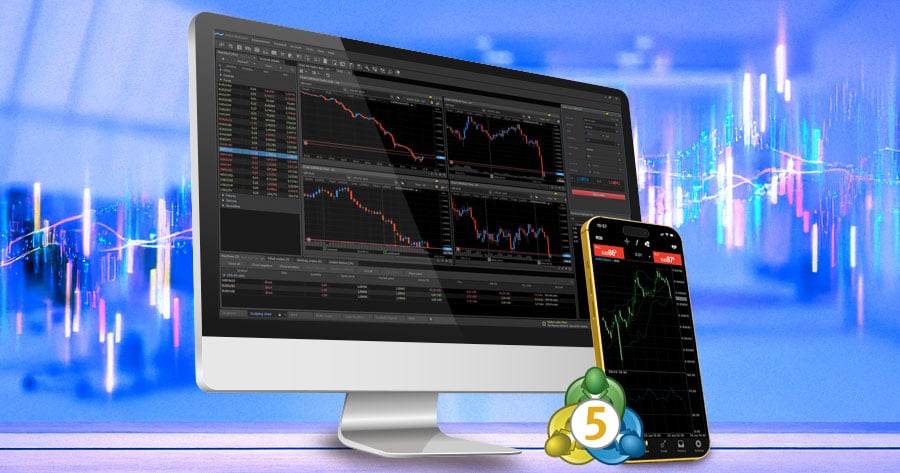
Modern trading technologies and platforms can greatly enhance your decisions and productivity in the South African markets. Real-time price feeds, automated trading, charting tools, and technical indicators enable traders to better identify possibilities and control risk. Many South African brokers also have mobile apps that enable traders on the move to monitor positions and carry out transactions. Moreover, demo accounts offer a risk-free testing ground for ideas before investing real money, very useful for novices or those experimenting with fresh methods. Smart use of technology helps traders to be ahead of market trends and more exactly implement plans.
Common Mistakes to Avoid While Trading in South African Markets
Many traders fail due to avoidable mistakes. Following are some of the many:
Ignoring Global Market Influences
Markets in South Africa do not run on their own. Global risk attitude, US interest rate decisions, commodity price swings, and geopolitical events all have a great impact on the South African Rand. Many traders concentrate solely on local news, neglecting global events like Federal Reserve announcements or worries of worldwide recession.
Global capital flows might have a major effect on the stock market and the currency of South Africa since it is an emerging market economy. Failing to watch worldwide developments might cause erratic volatility and badly timed transactions.
Ignoring Risk Management
The most detrimental error is gambling too much capital on a lone deal. Several bad transactions could eliminate large parts of a trading account if not correctly sized and stop-loss placed.
Generally, successful investors in South African markets per trade risk just a modest proportion (1–2%) of their capital. Regular risk management lets traders weather losing streaks and remain in the market long enough to profit from successful trends.
Emotional Trading
Trading is driven by strong emotions like greed and fear. Following a loss, some traders try to “revenge trade” in order to recover rapidly. Others become overly confident and unneedfully raise their risk following a victory.
Emotional trading frequently results in impulsive choices defying established rules. Regular performance analysis, adherence to a trading strategy, and control of discipline might reduce emotional intrusion.
Failing to Adapt to Market Conditions
Markets keep on shifting. In a trending market, a tactic that performs well could run into trouble in sideways or extremely volatile conditions. Traders who lack flexibility may lose often.
Regular backtesting, strategic evaluation, and awareness of financial changes can all help traders change and stay consistent throughout time. As currency volatility increases, many traders also explore crypto markets, particularly during periods of Rand weakness, which can create unique opportunities as explained in our guide on How the Weak Rand Creates Bitcoin Trading Opportunities.
Overtrading Volatile ZAR Pairs
Though it also raises risk, the volatility of ZAR currency pairings could be appealing. Some merchants try to profit on every price change by opening too many positions. Often causing greater transaction expenses, emotional tiredness, and uneven performance, overtrading also results in.
Instead of pursuing every possibility, traders should concentrate on high-probability setups that fit their strategy. Particularly in unstable markets, quality trades come first above volume.
Conclusion
Selecting the best trading plan for South African markets calls for a precise grasp of local economic forces, worldwide market influences, and your own risk tolerance rather than just following popular methods. Whether you favor trend following, scalping, position trading, options, or hedging, the secret is matching your strategy with prevailing market conditions and consistently managing your risk.
Because of currency volatility, commodity exposure, and rising participation in forex and CFD trading, South African markets present excellent opportunities. Long-term success, though, hinges on emotional stability, constant learning, and consistency. Choosing a plan suited for your financial objectives and changing with market conditions lets you trade more boldly and get long-lasting results over time.