South Africa’s financial landscape is evolving, and the gateway to unprecedented opportunities lies in online trading. Today, anyone with a smartphone, a small account balance, and a decent financial history can trade online, no personal broker or fortune required. You can trade stocks, currencies, commodities, and even cryptocurrencies quickly from your home or phone. But while online trading can bring fast gains if you time the market correctly, it also carries the real risk of substantial losses.
CMTrading helps beginners and advanced traders, offering step-by-step guides. Trading in South Africa offers an exciting yet challenging opportunity to explore something new. So, let’s walk through the key things you should understand before taking the leap.
What is Online Trading and How Does it Work
The essence of online trading is purchasing and selling financial instruments via an online trading platform. Online brokers provide traders with these online trading tools, typically at no cost. Anyone who wants to trade financial products on the markets and invest in the stock market can use them.
Thus, the main goal of online trading is to speculate in the financial markets in an effort to profit from shifts in asset prices between the time of purchase and resale.
In South Africa, online trading is regarded as a serious activity. It should be viewed as a career rather than a quick way to get money without taking chances or understanding the fundamentals of internet trading. However, anyone who is prepared to put in a lot of effort and give their all to this activity, where the mental discipline is a daily challenge, can participate in online trading.
When you trade online, you usually don’t buy the actual thing, like gold or shares. Instead, you guess whether the price will go up or down using a type of product called a derivative. You never really own the asset itself.
The Johannesburg Stock Exchange (JSE)
Founded in 1887, the Johannesburg Stock Exchange (JSE) is the largest and oldest stock exchange in Africa. Shares are traded in South African rands (ZAR). The JSE is ranked as the 19th largest stock exchange in the world by the World Federation of Exchanges.
Market regulation is governed by the Financial Markets Act of 2012, the JSE Rules and Directives, and the Financial Intelligence Centre Act of 2001. The JSE has its own Market Regulation division, which works to prevent insider trading, market manipulation, and other prohibited practices.
The primary regulatory body overseeing the market is the Financial Sector Conduct Authority (FSCA). The FSCA investigates potential abuses and takes action when needed. It operates transparently, regularly publishing updates on current investigations, including any matters referred by the JSE’s regulation division.
For smaller or emerging companies not yet ready to list on the main JSE, the AltX exchange serves as a subsidiary platform. AltX helps small and medium-sized businesses raise capital and attract investors while remaining fully regulated.
Pros and Cons of Online Trading in SA
There is always risk, both online and offline, regardless of how you trade online. The benefits and drawbacks of online trade are listed below.
Benefits
- No middleman: Trade directly without a broker. Great if you can’t afford full-service brokers.
- Cheaper & faster: Online fees are lower than traditional brokers, and trades happen instantly.
- More control: You decide when and what to trade, without broker interference.
- Real-time monitoring: Track your investments live from your phone or computer using local platforms like EasyEquities, GT247, or SA Forex brokers.
Disadvantages
- Easy to overinvest: Clicking “buy” is quick, but you might trade too much too fast. Use limit orders to stay safe.
- Overexposure: Putting too much money into one trade, especially with leverage, can wipe you out. Leverage cuts both ways.
- No broker relationship: You’re on your own. No one to guide your strategy or explain market moves. Research is essential, especially for beginners.
- Addictive nature: Trading can feel like gambling. Without self-control, it becomes risky and hard to stop.
Top 5 Trading Platforms in South Africa for 2026
1. CMTrading: Best for Local Support & Risk Protection
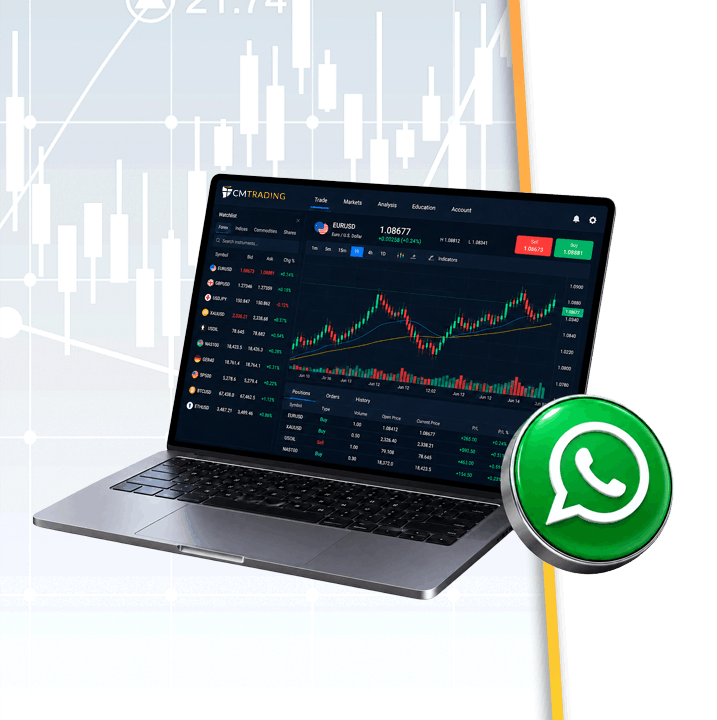
A top-rated, FSCA-regulated broker based in South Africa. It offers a “Protected Stage” where new traders can get cashback on initial losses. It supports ZAR accounts and provides access to Forex, Crypto, Commodities, and Indices via MetaTrader 4 (MT4) and its own WebTrader.
2. FP Markets: Best for Low Costs & Wide Selection
Regulated by the FSCA and known for deep liquidity. FP Markets offers tight spreads from 0.0 pips and access to over 10,000 instruments, including stocks and crypto CFDs. It supports advanced platforms like MT4, MT5, cTrader, and TradingView.
3. Pepperstone: Best for Fast Execution
Popular among active traders for its Razor Account with ultra-low spreads and high-speed execution (up to 1:400 leverage for SA traders). It supports MT4, MT5, cTrader, and TradingView, offering a robust environment for scalping and automated trading.
4. Capital.com: Best for Beginners & AI Tools
Features a user-friendly, commission-free platform with AI-powered insights to help identify trends. It offers a wide range of CFD markets and provides negative balance protection, making it a safe choice for new traders.
5. IG Markets: Best for Comprehensive Research
An award-winning global broker with a strong FSCA presence. IG offers over 19,000 markets, an intuitive mobile app, and extensive educational resources. It is suitable for traders of all levels who value in-depth analysis.
Common Forex Trading Approaches
- Day Trading: To reduce the danger of overnight market volatility, this approach entails opening and closing trades on the same trading day.
- Swing Trading: To profit from anticipated directional changes in the market, swing traders hold positions for a few days.
- Position trading: It is a long-term approach that concentrates on the underlying elements that influence currency values over a period of months or years.
- Scalping: A quick strategy that often enters and exits trades in a matter of minutes with the goal of making little profits on slight price movements.
How to Trade in South Africa
Step 1: Decide Between a Local or International Broker
You have two main options:
Local SA broker: Based in South Africa and regulated by the FSCA. Often provides direct access to the JSE and support for ZAR accounts.
International broker: Based outside SA but offers access to the JSE. Ensure they are well-regulated in their home country.
Step 2: Check if Your Current Broker Offers JSE Access
Start by asking your existing broker whether they provide access to the Johannesburg Stock Exchange (JSE). Many don’t, and that’s normal; not every broker connects to every exchange. If they don’t, you’ll need to open a new account elsewhere.
Step 3: Find a Broker That Specifically Offers JSE Access
Don’t assume a “global broker” automatically includes the JSE. You may need to ask them directly: “Do you provide access to trading on the JSE?” Many brokers don’t list this clearly on their websites.
Step 4: Understand Why Some Brokers Don’t Offer JSE Access
Registering for a foreign exchange costs money. Some brokers choose to focus on their home market with excellent local service, while others invest in access to multiple international exchanges. Neither approach is bad: it’s just a different business model.
Step 5: Look for Brokers With a Local SA Office
You can also search for international brokers that have a physical office in South Africa. This often combines global reach with local support.
Step 6: Prioritise FSCA-Regulated Brokers
Only trade with brokers that are fully authorised and regulated. In South Africa, the key regulator is the Financial Sector Conduct Authority (FSCA) (formerly the FSB). The South African Reserve Bank (SARB) oversees the Prudential Authority (PA) for banks, but brokers should fall under the FSCA for investor protection.
Some international brokers offer JSE access without an SA office. They may not fall under FSCA rules, but they must be regulated by a trusted authority in their own country.
Step 7: Open Your Trading Account
Once you’ve found a regulated broker that offers JSE access and meets your needs (fees, platform, support), open an account and fund it.
Step 8: Understand the JSE Market Structure
The main benchmark is the FTSE/JSE Africa All Share Index, which covers most eligible equities on the JSE across sectors like finance, tech, healthcare, and real estate.
It is broken down into:
- FTSE/JSE Top 40 Index: The 40 largest companies by investable market value
- Mid Cap Index: Medium-sized companies
- Small Cap Index: Smaller companies
- AltX Exchange: For smaller or emerging companies not yet on the main board
Step 9: Start Trading
After your account is set up, you can begin trading a wide range of JSE-listed companies and instruments.
Conclusion
For those looking to engage in international financial markets, the growth of online trading in South Africa offers intriguing options.
However, a dedication to education, strategic planning, and ongoing learning is necessary for success in this field.
South African traders can make significant profits if they grasp the basics and approach trading with research and discipline.
Choosing the right trading platform and broker is more crucial than ever. CMTrading, with its FSCA regulation, local support, and integration of MetaTrader 4 (MT4) and its own WebTrader, stands out as an exemplary choice for South African traders.