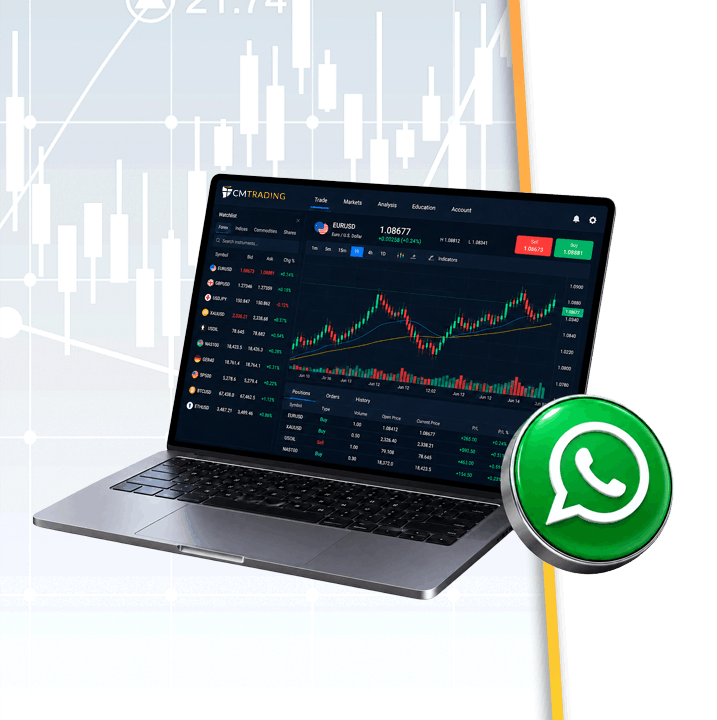
Contract for Difference (CFD) trading has gotten exceedingly popular in South Africa over the past couple of years. South African locals prefer CFD trading as it offers incredible opportunities in a huge variety of financial markets, even in complex and challenging trading environments.
Instead of the outright ownership of shares, commodities, or currencies, traders focus on price movement. Although this makes CFDs a tad risky, as losses can occur as quickly as profits, it allows the trader to remain flexible across a variety of market conditions.
South African traders tend to narrow down on a few core trading instruments that offer good enough liquidity, similar pricing, and availability during the usual trading hours in South Africa. Before you jump fully into CFD trading, it is better to garner a clear, concise, and complete understanding of how each market behaves.
The sections below break down the most traded CFD markets in South Africa and explain why they attract consistent interest.
Forex CFDs
Forex and crypto markets both respond to global risk sentiment, interest rates, and inflation expectations, which is why forex is one of the most traded CFD markets in South Africa. Currency pairs move throughout the week and respond quickly to shifts in the economy.
Forex CFDs suit traders who prefer structure. Because leverage is involved, controlling the risk is extremely important. Price movements in forex are smaller than in commodities or shares, but positions can grow quickly if exposure is not managed.
Here are some other reasons why South African traders choose forex:
- High liquidity
- Consistent price movement
- Strong reaction to economic releases
- Lower entry cost compared to shares
- Flexible position sizing
With the help of top CFD trading strategies, traders often apply trend-following or range-based methods to currency pairs rather than reacting emotionally to news.
Gold and Precious Metal CFDs
Gold CFD trading is quite a golden opportunity in the world of financial trading. This dynamic market holds a unique position in South Africa due to its economic history and global relevance. As a CFD market, gold offers strong liquidity and clear reactions to macroeconomic events.
Gold prices often move in response to:
- Inflation data
- Interest rate decisions
- S. dollar strength
- Global uncertainty
For South African traders, gold provides exposure to a global market without needing to trade foreign exchange directly. But keep in mind that sudden and unexpected shifts in the gold economy can cause sharp moves, which is why stop movement is incredibly crucial when it comes to gold CFDs trading.
Other precious metals like silver and platinum also trade as CFDs, but gold is the one that dominates markets in South Africa.
Indices CFDs
Indices offer a broader view of market sentiment. Instead of trading a single company, traders gain exposure to an entire group of stocks through one instrument. Trading in indices allows South African traders to have access to multiple profitable opportunities from market trends without having to own the underlying stocks.
Index CFDs are useful for traders who:
- Prefer clean price action
- Trade macro trends
- Want exposure without stock-specific risk
Most indices trade during defined hours but still offer good liquidity during those sessions. Volatility increases during market openings and around economic data releases, which creates opportunities but also risks. Because indices bundle multiple companies, they reduce the impact of a single earnings report or corporate event. This means that this form of trading can prove beneficial for both beginner and expert traders, as it offers leverage, flexibility, and exposure to global markets.
Some popular indices in South Africa include the S&P 500, Dow Jones, and Dax.
Share CFDs
Share CFDs in South Africa allow traders to speculate on individual companies without owning shares. This includes JSE-listed stocks and international companies. Share trading can seem daunting as it requires a little bit of research. Company earnings, sector performance, and guidance affect the price movement of shares.
Share CFDs behave differently from indices, as the prices move sharply when it comes to share CFDs, and the news impact is stronger.
Common reasons traders use share CFDs:
- Short-term earnings trades
- Sector-based ideas
- Event-driven strategies
- Liquidity varies by stock.
When it comes to CFD trading in shares, traders must check spreads and volume before entering positions. Share CFDs work best for traders who follow company news closely and avoid overtrading. Traders who can manage risk well and prefer targeted exposure would also be suited for share CFD trading.
Comparing Popular CFD Markets in South Africa
Based on recent analyses, the South African CFD trading world is quite competitive as it features both global entities and local brokers. Each market behaves differently. Many traders start with one and expand to others later, once they have a grasp on how CFD trading works.
But how do you choose the right market to enter first? That depends entirely on your preferences, capital, and risk tolerance.
Key differences include:
- Forex: Reacts fast to shifts in economic data.
- Gold: Can follow strong trends, even during times of global uncertainty.
- Indices: Offers a clean setup, but reflects overall market sentiment.
- Shares: Volatility depends on company news, and there is a higher risk.
Choosing the right market matters less than understanding how these markets move.
Risk Considerations in South Africa
CFDs involve leverage, which increases risk. This is why successful traders need to keep a few things in mind before executing a CFD trade. They need to control position size, stop-loss placement, and focus on the total exposure across markets.
Forex and indices usually allow tighter stops due to liquidity. Gold and shares may require wider stops due to volatility. When it comes to CFDs, risk management matters more than market selection. Even the best market becomes unprofitable without discipline.
CFDs in South Africa also behave in a similar manner to their underlying market. CFD prices into any asset or commodity are driven by the price movements of their specific markets. In order to minimise risk, you need to do your own research into the market you plan to invest in, whether it’s forex, commodities, or metals.
Leverage in CFD Trading
CFD trading is leveraged, which means you gain the ability to trade without paying for the full size of your position. It allows you to get complete market exposure for a small deposit known as margin, that you initially pay. While this can be incredibly beneficial if you succeed, it can also increase the chances of risk, as mentioned above. A few ways to manage CFD risks are as follows:
1. Use margins responsibly
It is a good idea to do your own research and view the patterns and insights of the market that you plan on investing in. Expert traders cap their risk tolerance at 1% or 2% of their total funds. This way, they can sustain more than one loss without losing more capital than expected.
2. Employ stop orders
Stop orders automatically close out a trade if it falls below a certain level. This can restrict your loss on any position you have entered. However, when placing a stop order, you need to keep in mind that the market may gap if it is too volatile. Prices change at the speed of light.
3. Hedge your position
CFDs can be used as hedging tools by experienced traders, as they allow you to short sell and profit from sharp decreases in market prices. Using CFDs to hedge will let you offset losses if the value of your long-term portfolio is at risk.
Strategy Over Variety
Many traders fail by switching markets too often. Success usually comes from consistency. Using expert strategies and trading tools, as well as avoiding risks by trading responsibly, helps traders focus on execution rather than guessing the direction.
These strategies rely on rules, not opinions. Learning how a specific market reacts to news and technical levels improves results over time. Some strategies that are used by experts in South Africa are as follows:
Trend-Following Strategies
These are popular trading strategies used by multiple traders globally. The idea is to identify the direction that the market is headed in and enter positions in the same direction with the goal of making profits from the momentum of the trend. Some examples include: Moving Average Crossover, Parabolic Stop and Reverse, and Moving Average Ribbon.
Mean Reversion Strategies
These techniques are built on the idea that prices revert to their mean value over the passage of time. If a commodity’s price has moved extremely far away from its average value, there is a high chance that it will move back towards it.
Conclusion
CFD trading offers access to global markets through flexible trading instruments. Forex, gold, indices, and shares each play a clear role and serve a different purpose in the CFD landscape in South Africa.
No single market suits everyone. Some provide broad exposure with cleaner trends, and others deliver targeted opportunities relying on the company’s performance. Traders who perform well are those who specialise in a specific market. They learn one market, apply clear rules, and manage risk carefully. CFD trading rewards preparation and restraint. Market choice matters, but execution and risk management matter more.